Designed around the line
Conveyor selection starts with the production flow: transfer distance, loading method, accumulation need, operator access and connection points with other equipment.
Conveyor systems
FMC supports industrial manufacturers with conveyor solutions planned around part geometry, load, line speed, transfer direction and operating environment. The scope can cover belt conveyors, roller conveyors, chain conveyors, modular conveyors and custom transfer equipment for production lines.
Application scope
A conveyor system moves parts, packages or bulk material between workstations with repeatable speed and controlled positioning. In manufacturing environments, the right conveyor layout reduces manual handling, stabilizes material flow and helps each process step receive parts in the required orientation.
Conveyor selection starts with the production flow: transfer distance, loading method, accumulation need, operator access and connection points with other equipment.
Part weight, contact surface, temperature, contamination risk and required positioning accuracy determine whether a belt, roller, chain or modular conveyor is more suitable.
The mechanical layout can be coordinated with fixtures, special machines, assembly stations, inspection areas and packaging or logistics equipment.
Conveyor types
The transfer task, product and line conditions are considered together.
Belt conveyors are suitable for continuous transfer of parts, packages and light-to-medium loads. They are commonly used between production, assembly, inspection and packaging stations.
Technical scope
Typical scope: belt width, length, drive position, support frame and side guides
Roller conveyors are used for boxes, pallets, trays and rigid-bottom parts. Gravity or driven roller layouts can support accumulation, buffering and station-to-station transfer.
Technical scope
Typical scope: roller pitch, load class, frame height and transfer direction
Chain conveyors are preferred for heavier products, pallets, carriers and robust industrial transfer tasks where positive drive and durable carrying elements are required.
Technical scope
Typical scope: chain type, carrier detail, drive unit and guarding concept
Modular conveyors use segmented belt or modular construction for lines that need easy layout adaptation, curved transfer, wash-down access or segment-level maintenance.
Technical scope
Typical scope: module type, curve radius, surface profile and guide configuration
Inclined conveyors move products between different heights. Cleats, side walls or guided surfaces can be considered where rollback or product movement must be controlled.
Technical scope
Typical scope: incline angle, product support, cleat height and discharge point
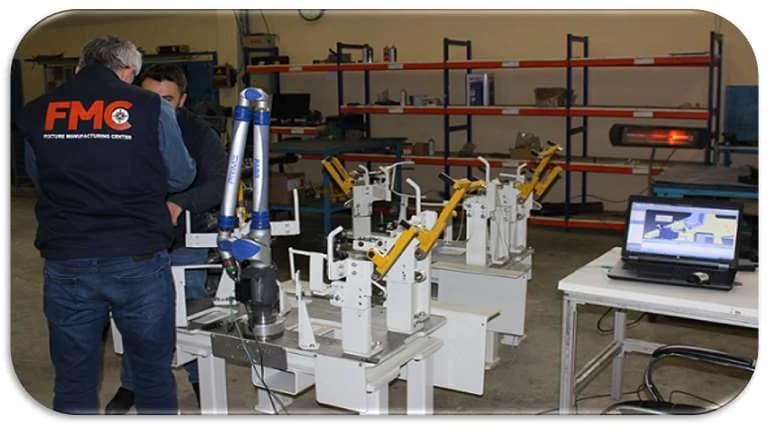
When a standard conveyor is not enough, the layout can be shaped around special machine interfaces, fixture loading points, inspection cells or production-specific handling needs.
Technical scope
Typical scope: CAD review, mechanical design, fabrication, assembly and try-out
Selection criteria
Conveyor performance depends on the relationship between the product and the production environment. Before manufacturing, the technical scope should define what is being transported, how it is loaded, how fast it must move and which process equipment it connects to.
Engineering approach
Use cases
Belt, roller or chain conveyors for part transfer between machining, assembly and inspection operations.
Controlled product movement for indexed assembly, manual workstations and line-side preparation areas.
Conveyor layouts for boxes, packages, trays and end-of-line transfer before shipment or storage.
Transfer solutions connected with special machines, fixtures, grippers and process-specific mechanical systems.
Technical quote
Share product dimensions, approximate load, transfer distance, line speed, working environment and integration points. FMC can evaluate a conveyor solution around your production flow without overstating the scope before the technical data is reviewed.
Request conveyor system quote